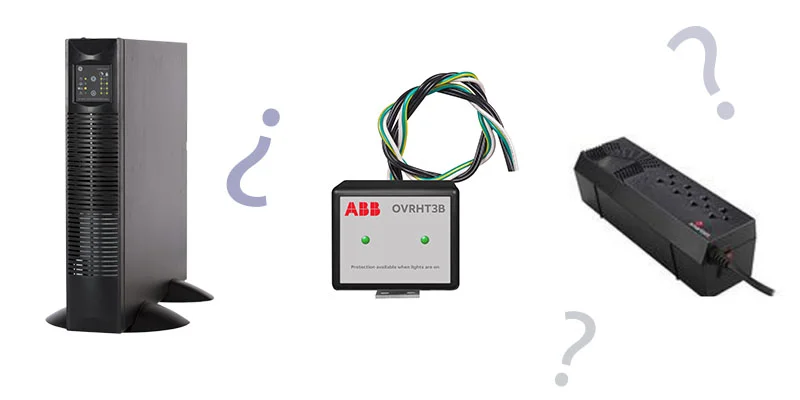

In daily activity, there is always the risk of our electrical appliances being affected, this can often result in loss of information, time and valuable work, either due to human errors, incidents with technology or because nature made a bad move on us.
During the rainy season, the risk of having electric shocks without warning is high, so in this article we will talk about the real difference in protection that exists between OOPS, Peak Suppressors and Regulators, which will prevent your information and work from being lost and, of course, that your devices are not damaged, remember that your work tools are important.
Its real function comes in the face of a sudden absence of energy by providing electricity to the devices that are connected, converting direct current into alternating current, and it has rechargeable batteries and electronic circuits that are the ones that can sense when there will be a lack of energy and quickly provides energy backup until the battery runs out, thus preventing the loss of information and the shutdown or failure of some equipment.
The real difference between a no break and a UPS is that a no break can support small devices such as a printer or television, but a UPS is a device with greater capacity that can protect much more specialized and more careful equipment.
Also called a “transient surge suppressor” or “Surge Protective Device”, it works when it detects a transient overvoltage, suppresses it and sends it to the ground so that this peak voltage does not reach any electronic equipment and can break down. He is the teacher par excellence in the face of a shock.
As its name suggests, it is responsible for regulating voltage, but not suppressing electrical discharges, in other words, it can receive an electrical voltage of variable voltage at the input and within a certain parameter, it maintains a constant voltage at the output. These will protect the devices against voltage variabilities. Its real function is to protect electrical devices against rising and falling voltages, the consumption of such devices must not exceed the maximum capacity of the regulator.

