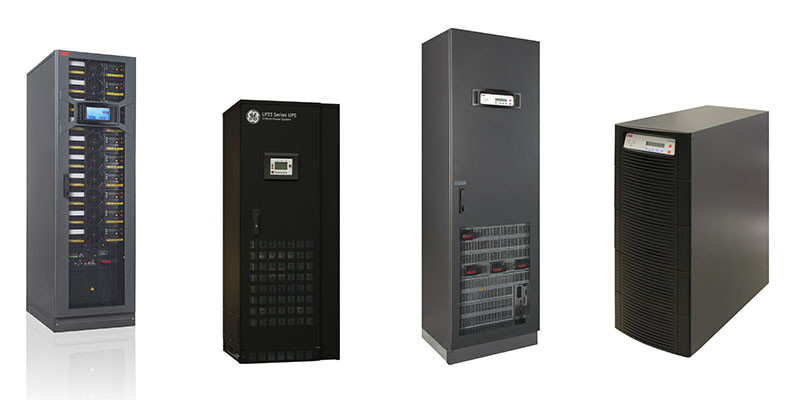

Although today technology has advanced and there is a solution to almost every problem, what never changes is the dependence we have on public electric service networks to operate.
And these power supply networks are not 100% reliable. This year, power service failures are forecast in important provinces of Mexico, as an example last April, a major power failure affected the entire Mexican southeast.
Between the overload of the public grid, the growing demand, the severities of the climate and the risks lurking within their own facilities, for companies, energy supply failures are a real risk. To control the negative impact of faults and prevent damage to equipment, there are UPS (Uninterruptible Power Supply, or Uninterruptible Power Supply). These solutions allow you to overcome data loss and system downtime by regulating electrical energy and providing battery backup during power outages.
HOW MUCH ENERGY DO YOUR BACKUP EQUIPMENT REQUIRE?
We must ensure that the UPS can handle the total electrical load (energy consumption) of the equipment you want to connect. To estimate the power requirements, add the power (in Watts) of each device, for this you can use the equipment's nameplate or the manufacturer's documentation. If the output is listed in amperes, multiply by the AC voltage to estimate the power in watts. IMPORTANT RECOMMENDATION: Choose a UPS with an output power capacity 20%-25% greater than the total power of the devices you want to connect.
HOW MUCH BATTERY LIFE DO YOU NEED?
Autonomy is the number of minutes that the UPS is capable of backing up power to connected equipment when public grid power fails. As power capacity increases, range decreases. The recommendation is that you choose UPS systems that accept external battery modules to extend their range in a blackout.
WHICH ONE ISIS IT THE VOLTAGE OF THE POWER SOURCE?
In North America, the voltage used to power servers and network equipment is 120V or 208V/240V. For their part, Europe and Asia normally provide 230V power. It's important to note that the plug on the UPS matches the outlets on your power supply.
HOW MANY POWER OUTLETS DO YOU NEED?
It's important to have more electrical outlets than we need, to ensure space for future growth. Most rack mounted UPS applications will require a Power Distribution Unit (PDU) to support additional equipment plugs.
Some UPS systems have power outlets with surge protection that don't provide battery backup, so this is a very important point to consider.
DO YOU NEED PURE SINE WAVE OUTPUT?
Pure sine wave energy helps prevent other devices from overheating, malfunctioning, or failing prematurely. UPS systems with Pure Sine Wave output provide superior compatibility with active PFC (Power Factor Correction) power supplies and other delicate equipment such as network hardware.
WHERE DO YOU PLAN TO INSTALL THE UPS SYSTEM?
There are a wide variety of UPS sizes and form factors. So we must make sure that the UPS system we take is shaped and fits in space.

